10 Best Cosmetic Bottle Suppliers for Global Buyers
Choosing a Cosmetic Bottle supplier is not just a matter of comparing prices. Buyers must check material quality, closure fit, decoration options, production capacity, and delivery consistency. A sample may look polished under showroom lights, yet leak after repeated handling. Small details matter. A cap that loosens in transit can undermine an otherwise strong package. So can a color that shifts between production batches.
Materials-selection expert Dr. Andrew H. Dent offers a useful lens for evaluating packaging. The line below is an editorial summary, not a verified verbatim quotation: “A good package balances material performance, practical use, and manufacturability.” This guide to the 10 best Cosmetic Bottle suppliers for global buyers applies that principle to real sourcing questions. It considers bottle formats, customization, quality controls, communication, and the ability to support different order volumes. Buyers should also request current specifications and representative samples before making decisions. Supplier capabilities can change, and a polished website is not proof of consistent production. No shortlist is perfect. A supplier that suits a large launch may not fit a small first run. That distinction deserves more attention than it often gets.
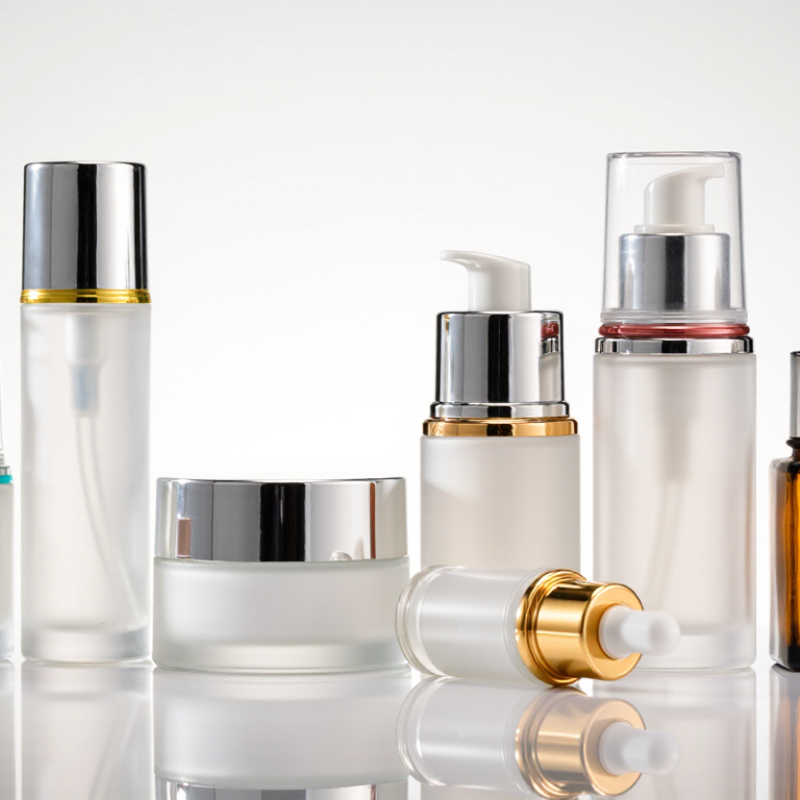
Cosmetic Bottle Supply: Glass, PET, PCR Plastics, and Airless Formats
10 Best Cosmetic Bottle Suppliers for Global Buyers
Cosmetic Bottle Supply: Glass, PET, PCR Plastics, and Airless Formats
Choosing a cosmetic bottle supplier starts with matching the package to the formula and daily use. Glass feels substantial on a vanity and can suit products sensitive to material interaction, but its weight raises shipping costs and breakage concerns. PET is lighter and easier to transport. Ask suppliers for compatibility data and samples before confirming a production run; appearance alone cannot show how a formula behaves over time.
PCR plastics can reduce reliance on newly made plastic, but their color and clarity may vary between batches. Request details about the available recycled content and check whether the finished bottle meets your visual requirements. A slight tint may be acceptable, or it may undermine a carefully chosen product color. There is no perfect material choice.
Airless formats can help limit product exposure to air and make dispensing more controlled. They are useful for thicker creams, though pump performance should be tested with the actual formula. Check output per stroke, leftover product, and whether the container can be filled using your production setup. Small differences matter.
For global buyers, evaluate more than unit price. Ask about minimum order quantities, lead times, quality checks, and packaging for transit. Request samples from the intended production process, not just a polished display piece. I would still leave room for a second review: a bottle that looks right in a photograph may feel awkward in a customer’s hand.
How to Compare 10 Global Suppliers by MOQ, Capacity, Lead Time, and Region
Compare ten cosmetic bottle suppliers using the same four-point scorecard: minimum order quantity, verified monthly capacity, quoted lead time, and production region. Grand View Research estimated the global cosmetic packaging market at about US$35 billion in 2023, showing why supplier claims deserve careful checking. A low MOQ may suit a launch, but it can come with higher unit costs or fewer decoration options. Ask whether quoted capacity covers your bottle shape and material, not the factory’s total output. Small detail. It matters.
Record lead times separately for samples, tooling, production, and shipping. A “30-day” promise may cover production only. Request recent delivery records and clarify what happens when orders peak. Compare regional suppliers by freight route and time-zone overlap, not distance alone. UNCTAD’s Review of Maritime Transport 2024 describes ongoing disruption and uncertainty in shipping, making a buffer more than a spreadsheet formality. For each of the ten suppliers, note the quote date and assumptions. Even a neat comparison can mislead: capacity figures and lead-time estimates are not always independently verified. Ask for evidence, then leave room for the awkward surprises.
Compliance Benchmarks: ISO 22716 and EU Cosmetics Regulation 1223/2009
For global buyers, a cosmetic bottle supplier should understand how packaging records support compliance. ISO 22716 describes good manufacturing practices for cosmetics, including production, storage, and shipment. It is useful to ask how a supplier controls batch records, cleanliness, and product changes. A certificate alone tells only part of the story.
EU Cosmetics Regulation 1223/2009 places obligations on the finished cosmetic product’s responsible person, not automatically on every bottle supplier. Still, packaging choices can affect product safety and quality. Request material specifications, batch traceability, and information on substances that may interact with the formula. Check that proposed bottles suit the product’s viscosity, dispensing method, and storage conditions. A pump that works with a watery lotion may struggle with a thicker cream.
Ask suppliers how they investigate defects and notify customers about material or process changes. These details can support a brand’s safety assessment and product information file. For EU sales, the responsible person must ensure the required safety assessment, product information file, notification, and compliant labeling are in place. Keep records accessible. A tidy folder is helpful, but it does not prove that a factory follows its procedures every day. An occasional gap deserves a closer look.
| Profile | Supplier Type | Typical Packaging Scope | Buyer-Fit Criteria | Evidence to Request | Compliance Benchmark |
|---|---|---|---|---|---|
| 01 | Glass bottle specialist | Glass bottles, jars, and compatible closures | Suitable when product compatibility, premium appearance, and glass specifications are priorities. | Material specifications, dimensional drawings, defect limits, and product-compatibility test records. | Confirm the packaging is suitable for the finished product and that relevant supplier controls support the responsible person’s EU product-safety assessment. |
| 02 | PET packaging specialist | PET bottles and matching caps or dispensing components | Suitable for lightweight packaging programs that require documented resin and component specifications. | Resin identification, component specifications, change-control records, and compatibility or stability-test support. | Packaging evidence can support the safety assessment under Regulation (EC) No 1223/2009, Article 10 and Annex I; it does not replace the assessment. |
| 03 | Recycled-content packaging specialist | Bottles made with declared recycled material content | Suitable when buyers need traceable material-content claims and a documented supply chain. | Recycled-content calculation method, batch traceability, material specifications, and substantiation for any environmental claims. | Verify that safety and composition information is adequate for the cosmetic product’s safety assessment; avoid unsupported claims. |
| 04 | Airless packaging specialist | Airless bottles, pumps, and product-contact components | Suitable for products requiring a controlled dispensing system or protection from repeated exposure during use. | Dispensing performance data, component breakdown, compatibility testing, and filling-line requirements. | Assess the complete packaging system with the finished formula; document relevant information for the EU safety assessment and Product Information File. |
| 05 | Dropper bottle specialist | Dropper bottles, pipettes, bulbs, and closures | Suitable for liquid products where dispensing consistency and component compatibility matter. | Dropper material specifications, dose or dispensing tests where relevant, leakage tests, and compatibility records. | Confirm packaging-related information is available to the responsible person for the safety assessment required by Article 10. |
| 06 | Spray and pump supplier | Fine-mist sprayers, lotion pumps, and compatible bottles | Suitable for products requiring repeatable spray or pump performance across the intended use conditions. | Output or performance data, closure and leak tests, component specifications, and production-lot identification. | Evaluate packaging compatibility and foreseeable use as part of product safety; keep supporting records with the relevant product documentation. |
| 07 | Custom-decoration packaging supplier | Printed, coated, labeled, or otherwise decorated bottles | Suitable for buyers needing custom appearance, multiple decoration processes, or coordinated packaging components. | Approved artwork records, print and coating specifications, migration or compatibility information where relevant, and revision control. | Check that packaging and labeling information do not conflict with EU label requirements under Article 19; the responsible person remains accountable for compliant labeling. |
| 08 | Refill-system packaging supplier | Reusable primary packs, refill bottles, and refill-compatible closures | Suitable for programs that need defined refill instructions, repeated-use performance, and component interchangeability. | Reuse-cycle or durability test method, cleaning or refill instructions, compatibility data, and component identification. | Assess the intended use and foreseeable misuse of the complete system; maintain supporting safety information in the Product Information File as applicable. |
| 09 | Integrated bottle-and-closure supplier | Coordinated bottles, caps, pumps, and related components | Suitable when buyers want a single technical interface for component fit, assembly, and packaging testing. | Assembly specifications, dimensional tolerances, closure or leak-test results, and supplier change notifications. | Request documented controls relevant to packaging production. ISO 22716 provides cosmetics GMP guidelines; it is not, by itself, a product-safety approval or a universal packaging certification. |
| 10 | Export-oriented packaging manufacturer | Standard or custom bottles prepared for international shipment | Suitable for buyers coordinating export documentation, shipment protection, and repeat orders across markets. | Current specifications, quality records, lot traceability, export packing details, and written change-control procedures. | Verify the supplier’s actual manufacturing controls and scope. EU Regulation 1223/2009 places cosmetic-product obligations on the responsible person and other relevant economic operators. |
Buyer-screening guide, not a verified ranking of named companies. The profiles describe supplier capabilities rather than individual supplier claims. ISO 22716:2007 sets guidelines for Good Manufacturing Practices for cosmetics; request any claimed certification, its scope, issuing body, and validity directly from the supplier. EU references are to Regulation (EC) No 1223/2009, including Article 10 and Annex I on safety assessment, Article 11 on the Product Information File, and Article 19 on labeling.
OECD Data: Packaging Accounted for 40% of Plastic Waste in 2019
OECD data show that packaging accounted for 40% of plastic waste in 2019. This figure covers packaging broadly, not cosmetic bottles alone. Still, it gives global buyers a concrete reason to examine bottle design. A small container can include a bottle, pump, cap, label, and coating. Those parts may use different materials, making sorting harder. Design decisions matter.
When assessing cosmetic bottle suppliers, ask for clear material specifications, recycled-content documentation, and compatibility test results. Request samples filled with your intended formula. Check for leaks, discoloration, and pump problems after storage. Lightweight bottles may use less plastic, but walls that are too thin can crack during shipping. Then the product may be lost too. Trade-offs are real, and no single design fits every market. Compare refillable and simpler-material options, while checking whether local collection systems can handle them. The OECD figure refers to 2019, so avoid presenting it as a current waste rate.
Tips: Ask suppliers how they verify material claims. Test filled samples, not empty bottles. Keep written records. A brochure is not enough. And sometimes, the more sustainable option is less obvious than expected.
Global Procurement Checks: Samples, Quality Control, Logistics, and After-Sales
For global buyers, supplier evaluation should begin with a physical sample, not a polished catalog image. Request the exact bottle, closure, pump, and decoration intended for production. Fill it with the planned formula, then check leakage, dispensing consistency, color variation, and label adhesion over several days. Small details matter. Record sample dimensions and weight, then compare them with the approved specification. One successful sample is useful, but not conclusive; test several units when possible. Ask how the supplier controls incoming materials, molding, and final inspection. Dated inspection records are more useful than broad assurances.
Before ordering, agree on written acceptance criteria, including defect definitions, dimensional tolerances, and carton protection. Confirm production lead times, freight responsibilities, and which shipping documents the supplier will provide. For glass bottles, request photos of packed cartons and check whether dividers prevent bottles from striking each other. Plan for delays. No checklist catches everything; procurement teams can still overlook a small mismatch between sample decoration and mass production. Arrange a pre-shipment inspection for larger orders, and clarify how defects will be reported, reviewed, and replaced. Reliable after-sales support should include a named contact, a response timeframe, and a documented resolution process.
Skip to content