7 Tips for Choosing Kids Dress Leather Shoes
Choosing Kids Dress Leather Shoes takes more than matching a polished pair to a special outfit. The right choice should feel comfortable, fit securely, and leave room for growing toes. Fit comes first. A shoe that pinches at the forefoot or slips at the heel can turn a school ceremony into an uncomfortable day.
The market is growing, but that does not make every fashionable option suitable for children. Grand View Research estimated the global children’s footwear market at USD 46.8 billion in 2023 and projected continued growth through 2030. That figure describes market demand, not shoe quality or foot health. Pediatrician Steven A. Dowshen, MD, in KidsHealth guidance, emphasizes choosing children’s shoes for a proper, comfortable fit. His practical advice is worth more than a glossy product claim.
This guide looks at seven useful checks, including toe-room, sole flexibility, secure fastening, material, and everyday durability. Picture a child walking across a school hallway: the heel should stay put, and the toes should not press against the leather. Parents can still miss things. Leather may soften with wear, but tight shoes should not need “breaking in.” A quick fitting check can reveal problems, though children’s feet grow at different rates. These tips help families compare options with care, while keeping comfort ahead of appearance.
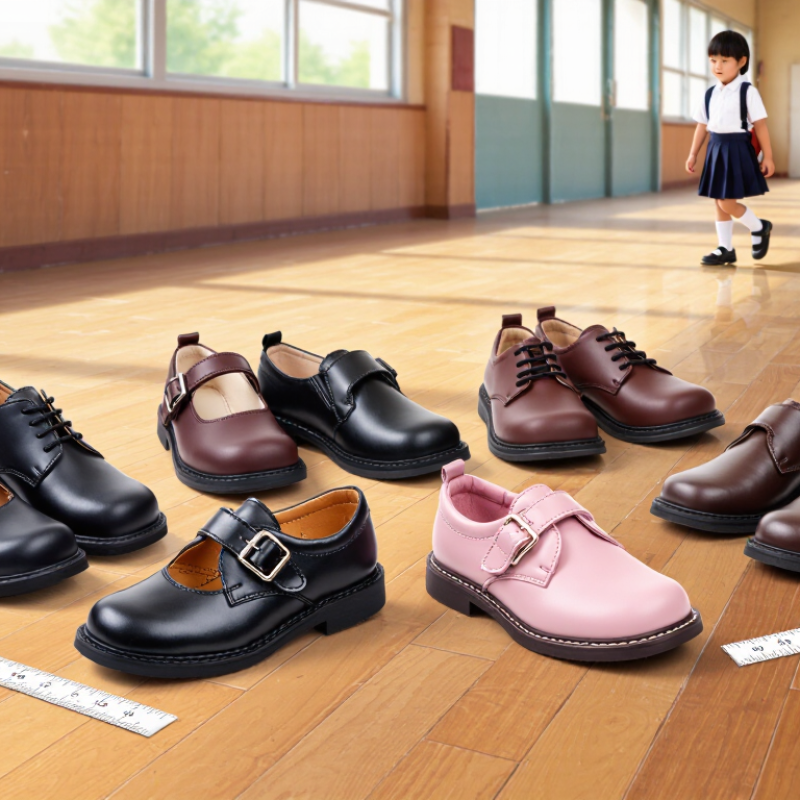
Assess the Child’s Foot Size and Shape
A child’s measured size is only a starting point. Measure both feet while the child is standing, wearing the socks intended for the shoes. Check the longer foot, then note its width and shape. Some children have broad forefeet or high insteps, and a standard size can still pinch. A quick glance is not enough. A 2018 systematic review in the Journal of Foot and Ankle Research reported that 63% to 72% of children wore poorly fitting shoes. That finding makes careful fitting more than a comfort issue.
For dress leather shoes, press gently across the toe box and ask the child to wiggle every toe. Leave roughly 10–15 millimeters of space beyond the longest toe, while keeping the heel secure and the midfoot comfortably held. Leather may soften with wear, but it will not meaningfully lengthen; don’t rely on it to fix a short fit. The American Academy of Pediatrics recommends flexible footwear that allows natural foot movement, rather than stiff, restrictive shoes. Check fit again every few months, especially during growth spurts. Children are not always good at describing pressure. A red mark after removal deserves a second look, even if the shoes look polished and neat.
| What to Assess | How to Check | What to Record or Look For | What It Means for Shoe Selection |
|---|---|---|---|
| Foot length | Have the child stand with their heel lightly against a wall. Measure from the wall to the tip of the longest toe. | Measure both feet while standing; feet may differ in length. | Use the longer foot when comparing measurements with a sizing chart. Do not select a size based only on age. |
| Foot width | Measure across the widest part of each foot, around the ball of the foot, while the child is standing. | Note whether the foot is narrow, average, or wide, and check both feet. | Look for a suitable width option or a shape that does not squeeze the sides of the foot. |
| Toe shape and spread | Observe the toes while the child stands naturally. Check whether the toes spread broadly or taper toward the big toe. | Identify the broadest area and whether the toe line is rounded, tapered, or uneven. | Choose a toe box that follows the child’s natural shape and leaves room for the toes to move. |
| Instep height | Check the height over the top of the foot where the shoe closes or fastens. | Notice whether the instep looks low, average, or high, and whether the fastening can close comfortably. | A comfortable closure should hold the shoe securely without pressing into the top of the foot. |
| Fit allowance at the toes | With the child standing in the shoes, feel for space in front of the longest toe or check the fit according to the shoe maker’s guidance. | A modest space is needed for toe movement and growth; avoid both toe pressure and excessive extra length. | Do not buy shoes that are so large they slip or make walking unstable. |
| Heel fit | Have the child walk several steps and check whether the heel stays comfortably in place. | Look for excessive heel slipping, rubbing, or pressure. | A secure heel helps the shoe stay on during walking; adjust the fastening or try a different fit if it slips. |
| Fit with dress socks | Try shoes on with the type of socks the child will normally wear with them, preferably later in the day. | Check length, width, toe movement, and comfort on both feet while standing and walking. | Use the fit in the intended socks as the final check; leather shoes should feel comfortable from the start, not painfully tight. |
Choose Soft, Breathable Leather
Soft leather should bend with a child’s foot, not hold it rigidly. Breathability matters too: warm, damp feet can feel uncomfortable during a long school day. A 2018 systematic review in the Journal of Foot and Ankle Research reported that 63–72% of children in the reviewed studies wore shoes that were too small. The range is a warning, not a universal estimate. Check both length and width, and leave room for toes to spread. A SATRA TM47 test measures water-vapour permeability in footwear upper materials; ask suppliers for test results rather than relying on “breathable” claims alone.
Tips: Feel the leather inside and out. Flex the shoe gently at the ball of the foot. Look for a soft lining and minimal rough seams. Try shoes on later in the day, when feet may be slightly larger. Check fit while your child is standing. Leave a little toe room, but avoid a shoe that slips at the heel.
Softness is not the whole story. Leather that feels supple in the shop may still trap heat if the lining is coated or the shoe fits tightly. Let your child walk on a clean surface for a few minutes. Notice rubbing, pinching, or sweaty socks. I would not judge comfort from touch alone; materials and fit work together, and a quick try-on can miss problems that appear after hours of wear.
Check Fit, Flexibility, and Support
A good pair of kids’ dress leather shoes should fit comfortably before it looks polished. Measure both feet while your child is standing, preferably later in the day when feet may be slightly larger. Leave about a thumb’s width of space in front of the longest toe, but check that the foot does not slide forward. The heel should stay in place without rubbing. Try the shoes with the socks your child will usually wear. A quick try-on can miss pressure points.
Tip: Check flexibility and support. Gently bend the shoe near the ball of the foot; it should flex there, not fold in the middle. The sole should feel steady, while still allowing a natural step. Look for a softly padded collar and a secure fastening. These details can reduce rubbing and help keep the foot comfortably positioned. Avoid choosing a stiff shoe just because it feels sturdy. That judgment can be misleading.
Have your child walk, turn, and crouch in the shoes. Watch for toe gripping, heel slipping, or a change in stride. Ask where the shoe feels tight; children may not describe discomfort clearly. A little room is useful, but extra space is not a substitute for fit. Check the fit again as feet grow, and inspect the lining for worn or rough spots. Even a well-chosen pair may need replacing sooner than expected.
Match the Style to the Occasion
Match the shoe’s formality to the occasion, not just the outfit. A polished, plain leather lace-up suits a wedding, recital, or family ceremony. For a school celebration or relaxed dinner, a simple slip-on or rounded-toe style can look neat without feeling stiff. Black pairs easily with dark trousers, while brown works well with navy, tan, or cream. Check the venue.
Children still need to move when dressed up. Look for a flexible sole, a secure fastening, and enough room for toes to spread. The heel should not lift with every step. Have your child walk across a hard floor before the event. Watch for slipping, listen for rubbing, and ask where the shoe feels tight. Fit comes first.
Match shine and decoration to the setting: glossy finishes and buckles feel more ceremonial, while matte leather and fewer details suit regular school wear. It is tempting to choose the smartest-looking pair, but appearance alone can mislead. A new pair can be worn briefly at home before the big day, but it should never cause pain. Try it with the planned socks and trousers, then check the fit again near the toes.
Compare Durability, Care, and Cost
When comparing kids’ dress leather shoes, inspect the stitching, sole, and lining before judging the shine. A firmly attached sole and even seams are practical signs of careful construction, though they cannot guarantee long wear. Ask whether the leather can be conditioned and whether the sole can be repaired.
Small scuffs happen. A soft cloth and a suitable leather conditioner can help; soaking shoes or drying them beside a heater may damage the leather. Check care instructions, because finishes differ.
Cost needs context. The U.S. Bureau of Labor Statistics’ 2023 Consumer Expenditure Survey reports average annual household spending of about $655 on footwear. That figure covers all household members and footwear types, not just children’s dress shoes. Compare the price with expected wear: school ceremonies, weekly use, and whether the child is likely to outgrow the shoes quickly.
Fit matters as much as durability. Leave room at the toes, but avoid a loose heel that slips with each step. One detail is easy to miss: a replaceable insole may extend useful wear, but it cannot fix a poor fit.
ASTM International’s leather flex-resistance methods assess how leather withstands repeated bending; ask sellers for test information where available, rather than treating “genuine leather” as a durability score.
Some uncertainty remains. Care habits and a child’s activity can change how long the same pair lasts.
Skip to content